
Home
Favourites
View all Heimat1984
 Space Patrol1966
 Ein Herz und eine Seele1973
 Die Schatzinsel1966
 DRUCK2018
 The Sea Wolf1971
Newest series
View all- Stardust Hotel2026 · 7 episodes
- Miss Sophie - Same Procedure as Every Year2025 · 6 episodes
- Hundertdreizehn2025 · 6 episodes
- Dudes2025 · 8 episodes
- Call My Agent Berlin2025 · 10 episodes
- Chabos2025 · 8 episodes
- Drunter & Drüber - Chaos auf dem Friedhof2025 · 8 episodes
- Other People's Money2025 · 8 episodes
- Ghosts2025 · 6 episodes
- Call Me Levi2025 · 4 episodes
- Krass Klassenfahrt - Die neue Generation2024 · 26 episodes
- Viktor bringt's2024 · 8 episodes
Comedy
View all- Türkisch für Anfänger2006 · 52 episodes
- Over Christmas2020 · 3 episodes
- Ein Herz und eine Seele1973 · 25 episodes
- Der Bergdoktor2008 · 184 episodes
- Doctor's Diary2008 · 24 episodes
- Hausmeister Krause – Ordnung muss sein1999 · 80 episodes
- Ijon Tichy: Raumpilot2007 · 14 episodes
- Die Anstalt2014 · 102 episodes
- Other People's Money2025 · 8 episodes
- The Red Band Society2015 · 30 episodes
- Ghosts2025 · 6 episodes
- Das Traumschiff1981 · 119 episodes
Family
View all- Türkisch für Anfänger2006 · 52 episodes
- Holiday Secrets2019 · 3 episodes
- Heimat1984 · 11 episodes
- Der Bergdoktor2008 · 184 episodes
- Hotel Adlon2013 · 3 episodes
- Hausmeister Krause – Ordnung muss sein1999 · 80 episodes
- Die Schwarzwaldklinik1985 · 70 episodes
- Rivals Forever - The Sneaker Battle2017 · 2 episodes
- MaPa2020 · 12 episodes
- Das Traumschiff1981 · 119 episodes
- Our Miracle Years2020 · 12 episodes
- Viktor bringt's2024 · 8 episodes
Classics
View all- Heimat1984 · 11 episodes
- Space Patrol1966 · 7 episodes
- Ein Herz und eine Seele1973 · 25 episodes
- Die Schatzinsel1966 · 4 episodes
- The Sea Wolf1971 · 4 episodes
- Die Schwarzwaldklinik1985 · 70 episodes
- Auf Achse1980 · 86 episodes
- Das Traumschiff1981 · 119 episodes
- Monty Python's Fliegender Zirkus1972 · 2 episodes
- Monaco Franze1983 · 10 episodes
- Forsthaus Falkenau1989 · 321 episodes
- Kir Royal1986 · 6 episodes
The Burning Series guide
Burning Series: German-language series, from Heimat, Space Patrol and Ein Herz und eine Seele to Türkisch für Anfänger, Die Schwarzwaldklinik and Der Bergdoktor
German television has a character of its own, and most of it stays at home. Viewers abroad know a few thrillers; they seldom meet the series that Germans and Austrians have actually lived with for sixty years: the family sagas watched by half the country on a Sunday evening, the doctors of the Black Forest and the Tyrol, the Munich comedies whose lines are still quoted in beer gardens, the cabaret and the Christmas adventure serials. Burning Series is a guide to that television. It gathers 157 German-language series made between 1965 and 2026. Each has its own page, its story, its seasons and cast, and a Watch now button that leads to the official services carrying it in your country.
The catalogue has been chosen for the whole household. Every series was read through by hand, and the selection favours comedy, family drama, medical and mountain stories, period serials, cabaret and adventures for younger viewers. Crime series, horror, stories of the battlefield and comedy made strictly for adults were left out. What remains is the friendly centre of German-language television: a village in the Hunsrück followed through sixty years, a spaceship whose control desk was built from household appliances, a patchwork family in Berlin learning to share one bathroom.
The numbers give a first idea of the shape. Seventy-four of the series are comedies and eighty-nine are dramas, a good many of them both at once. Seventy turn on a family, fourteen on doctors and rescuers, twenty-three are set in the mountains or the countryside and thirty-one tell stories from history. Forty-three are classics made before 1990, and thirty-seven belong to the present decade. Twenty were made in or with Austria. Thirty-six are event serials of four parts or fewer, thirty-one ran for sixty episodes or more, and together they offer more than 5,400 episodes.
A first-time visitor can begin with any of six series. Heimat is Edgar Reitz's chronicle of one village, among the great works of European television. Space Patrol is the science fiction adventure of 1966 that Germany still loves. Ein Herz und eine Seele is the sitcom of the Tetzlaff family, repeated every New Year's Eve. Türkisch für Anfänger is the sharpest family comedy of this century. Die Schwarzwaldklinik is the hospital in the Black Forest that defined Saturday evenings in the eighties, and Der Bergdoktor is its present-day heir in the Tyrol.
How the guide is laid out
Burning Series is a white panel on a deep blue page. A blue banner at the top carries the flame logo and the search field, and beneath it runs a menu bar: Home, All series, Comedy, Family, Doctors, Classics, A-Z, My List and Help. The home page begins with a welcome box and a row of six posters, the favourites. Below them two columns of boxes list series by name, each box with a blue title bar and rows in alternating white and pale blue: Newest series, Comedy, Family and Classics. Each row gives the title, the year and the number of episodes, and each box ends its title bar with a View all link.
The lists are the main way through the catalogue. Comedy, Drama and Family sort the series by kind. Doctors and rescuers, Mountains and countryside, Cabaret and sketch, History, Young viewers and Adventure sort them by subject. Austria gathers the Austrian productions, Event serials and Long runs divide by length, Classics and four later lists by decade, and Top rated holds the thirty-nine with the strongest scores.
On a series page the poster stands beside the title, with the German title printed under the English one where the two differ. A row of small labels reports the first year, the count of seasons and episodes and the TMDB score; the premise follows in a paragraph, then the leading cast, then a table of seasons with their dates. The page ends with the country menu and the Watch now button. Burning Series stores the country you select, and the button leads to the JustWatch listing for that series, which names each service that streams, rents or sells it there.
Heimat and the family saga
Heimat stands a little apart from everything else in the catalogue. Edgar Reitz spent five years making its eleven films, which follow the people of Schabbach, an invented village in the Hunsrück hills, from 1919 to 1982. At the centre is Maria Simon, who is nineteen when the story opens and a great-grandmother when it closes. The century passes through the village as it passed through thousands like it: the first radio, the first road, the first car, sons who leave and sometimes return. Reitz films in black and white and, at moments of memory, in colour. When it was first shown in 1984, a large part of the country watched together.
Heimat 2: A Chronicle of a Generation followed in 1993 with thirteen films, each seen through a different character. Maria's youngest son Hermann leaves the village for Munich in 1960 to study music, and the series becomes a portrait of the students, film-makers and composers of that decade. Heimat 3: A Chronicle of Endings and Beginnings opens on the night the Berlin Wall falls, when Hermann meets Clarissa again, and follows the two of them home to a half-timbered house above the Rhine through the ten years that close the century.
The family saga is a form German television returns to again and again. Buddenbrooks, the eleven-part adaptation of 1979, tells Thomas Mann's story of a merchant house in Lübeck across four generations with a completeness that later film versions could only envy. Die Manns - Ein Jahrhundertroman turns to the author's own family, mixing drama with the recollections of his youngest daughter, and has Armin Mueller-Stahl as Thomas Mann. Manure and Gillyflowers follows Maximiliane von Quindt from her birth on a Pomeranian estate in 1918, and The Shop sees a village in Lusatia through the eyes of the baker's son.
The Legacy of Guldenburgs was the German answer to the glossy sagas of the eighties: a countess, an estate in the north, a brewery and a rival family. Der große Bellheim, by Dieter Wedel, is about business of a different kind. Mario Adorf plays the retired founder of a chain of department stores who returns to rescue it, bringing three friends of his own age, and the four old gentlemen prove more than a match for the young financiers. Krupp: A Family Between War and Peace and Die Pfeiler der Macht, from a novel by Ken Follett, are dynastic stories from the worlds of steel and banking.
Families of the week
Beside the great sagas stand the families who simply came round every week. Die Unverbesserlichen began in 1965 and returned once a year, usually on Mother's Day, to the Scholz household in Berlin, with Inge Meysel as the mother who holds everything together; she was known for the rest of her life as the mother of the nation. Diese Drombuschs followed a family in Darmstadt through the eighties, with their antique shop, their restaurant in an old mill and their share of joys and sorrows, and was among the most watched series of its time.
Ich heirate eine Familie is the lightest and best loved of the group. Werner, a Berlin advertising man and a happy bachelor, meets Angi at a party and learns only afterwards that she has three children. The fourteen episodes, written by Curth Flatow, follow the new family through house-moving, in-laws and school reports with unfailing good humour. Alle meine Töchter gives a widowed judge in Munich three grown daughters and a new wife, and Drei Damen vom Grill sets grandmother, mother and daughter behind the counter of a Berlin snack stand for one hundred and forty episodes.
Familie Heinz Becker comes from the Saarland. Gerd Dudenhöffer plays Heinz, a man in a flat cap with an opinion on everything, at home with his wife Hilde and their son Stefan; very little happens, which is exactly the point, and the dialect does the rest. Newer families are busier. All About Us follows two parents who run a small business in Leipzig, MaPa is about a young father in Berlin bringing up his baby daughter alone, and Tonis Welt follows a young couple, he with Asperger's syndrome and she with Tourette's, who move to the countryside to start a family.
Comedy since 2000
Türkisch für Anfänger began in 2006 and changed what a German family comedy could be. Lena Schneider is sixteen when her mother, a therapist with relaxed views on everything, announces that they are moving in with her new partner, a Turkish-German police inspector, and his two children: Cem, who considers himself the man of the house, and Yağmur, who is devout and tidy. Lena narrates the result to her video diary. Bora Dağtekin's scripts are fast and affectionate, and Josefine Preuß and Elyas M'Barek became stars. It ran for fifty-two episodes and won prizes across Europe.
Berlin, Berlin had opened the door four years earlier. Lolle, played by Felicitas Woll, follows a boyfriend from a small town in the north to the capital, loses him at once and stays, sharing a flat with her cousin Sven. Her thoughts appear as little cartoons, since she hopes to become a comic artist. The series ran for eighty-six episodes and won an International Emmy. Mein Leben & Ich gives a suburban teenager named Alex a dry commentary on her cheerful parents and her school, and Doctor's Diary follows Gretchen Haase, a young surgeon who returns to her father's hospital and finds that the senior physician is the boy who teased her at school.
Danni Lowinski has one of the best premises of any German series. Danni is a hairdresser who studied law at evening classes; when the big firms turn her down, she sets up a folding table in a Cologne shopping arcade and offers advice at one euro a minute. Annette Frier plays her with enormous heart through sixty-five episodes. Der kleine Mann stars Bjarne Mädel as a salesman of electrical goods who becomes, by accident, the face of an advertising campaign, and Dr. Psycho has Christian Ulmen as a gentle psychologist assigned to a police unit that would rather manage alone.
Workplace comedy is a German speciality. Das Amt is set in a city planning office whose head, played by Jochen Busse, has perfected the art of appearing busy. Ritas Welt follows a supermarket cashier with a quick tongue, Alles Atze the owner of a kiosk in Essen who knows everyone's business, and Hausmeister Krause – Ordnung muss sein a caretaker in Cologne who rules his block of flats and his dachshund club with equal firmness. Büro, Büro did the same for the office of the eighties, and Was nicht passt, wird passend gemacht for a small building firm in the Ruhr.
The newest comedies are short and varied. The Bedfellow makes a Munich car mechanic a lay judge for a term. Other Parents is a spoof documentary about a group of Cologne parents founding their own nursery. Viktor bringt's sends Moritz Bleibtreu out as a repair technician with his grown son as apprentice, and Dudes follows four friends in their forties through a course on being a modern man. The Wasp is about a darts champion on the way back up, Sweat about an ageing gym, and Ghosts moves a young couple into a manor house whose former residents have stayed on. Ijon Tichy: Raumpilot, from the stories of Stanisław Lem, is unlike anything else: a space pilot whose rocket looks from the inside like a Berlin flat, travelling with a holographic assistant played by Nora Tschirner.
Munich, Bavaria and Helmut Dietl
Munich produced a school of television comedy in the 1980s that many Germans regard as the best the country has made. Monaco Franze came first, in 1983. Helmut Fischer plays Franz Münchinger, a police inspector in name and by vocation a stroller through the city, who slips away from his wife's opera evenings and always comes home again. Helmut Dietl directed and Patrick Süskind helped to write it; there are ten episodes, and Munich is the second star. Kir Royal, three years later, is sharper: six episodes about a gossip columnist and his photographer in the high society of the city, with Senta Berger as the columnist's long-suffering companion and Mario Adorf, in a famous guest role, as a manufacturer of adhesives who wants to be noticed.
Irgendwie und Sowieso, by Franz Xaver Bogner, is set in the Bavarian countryside in 1968, where three friends feel the far-off tremor of the decade. Ottfried Fischer became famous as Sir Quickly. Königlich Bayerisches Amtsgericht goes back further still, to a small-town courtroom in the years before 1914, where the judge settles quarrels over fences, cows and insults in fifty-two short episodes, each introduced by the same fond narration. Der Bastian follows an easy-going student in Munich in 1973, and Fast wia im richtigen Leben is the sketch series in which Gerhard Polt and Gisela Schneeberger held up a mirror to their neighbours.
The tradition continues. Bier Royal is a two-part comedy about the heirs of a Munich brewery, Fat and Fat follows a young man drifting through the city's bars and friendships, and Gute Freunde - Der Aufstieg des FC Bayern tells how a modest local club with a goalkeeper, a sweeper and a centre-forward of unusual talent won promotion in 1965 and went on to conquer Europe.
Doctors and rescuers
The medical series is the most durable form on German television, and its modern history begins with Die Schwarzwaldklinik. From 1985 Professor Klaus Brinkmann, played by Klausjürgen Wussow, ran a clinic in the Glotter valley with his son Udo as a junior doctor and Nurse Christa at his side. Each episode brought a patient and a problem, the half-timbered building and the dark hills behind it did the rest, and up to twenty-eight million people watched. Seventy episodes were made. Praxis Bülowbogen offered a city counterpart two years later: Günter Pfitzmann as a general practitioner in Berlin whose surgery is the heart of his neighbourhood.
Der Bergdoktor, in the version that began in 2008, is the most successful series of the kind today. Doctor Martin Gruber comes home from New York to the family farm at the foot of the Wilder Kaiser in the Tyrol, intending a short visit, and takes over the village practice. Hans Sigl has played him for one hundred and eighty-four episodes of long, film-length stories in which a difficult diagnosis and a family complication unfold side by side, always in front of the same splendid mountains. Die Bergretter, set at Ramsau below the Dachstein, follows a team of mountain rescuers and their helicopter, and Medicopter 117 – Jedes Leben zählt did the same with two air-ambulance crews for eighty-two episodes of spectacular flying.
The village doctor has close relations. Lena Lorenz is a midwife who returns from Berlin to her mother's farm in the Bavarian Alps. Frühling follows Katja Baumann, a village helper who steps in wherever a family is in difficulty, in a place that really does bear the name of spring. Die Eifelpraxis sends a nurse and her children from Berlin to a country practice in the Eifel hills, and Mit Herz und Holly pairs an established doctor with a young colleague in a town on the Elbe.
Hospital series are just as various. Young Doctors follows a group of junior doctors in Erfurt through their training and has passed four hundred and seventy episodes. Alphateam – Die Lebensretter im OP is set in an emergency department in Hamburg. Dr. Klein stars Christine Urspruch as a senior paediatrician in Stuttgart, a newer series rides with an emergency doctor attached to a fire station in Mannheim, and The Red Band Society is the German version of a Catalan story about six young patients who form a club on their ward; it is honest, funny and full of courage, and it won the German Television Award.
Mountains, forests and villages
A large part of German-language television is set a long way from any city. Forsthaus Falkenau ran from 1989 for three hundred and twenty-one episodes in the Bavarian Forest, with a forester, his children, his mother-in-law and a wood full of animals. At Home in the Mountains follows two farming families in the Allgäu who were once close and are learning to be so again. Reiterhof Wildenstein and Trakehnerblut are about horses: a riding stable inherited by a young woman who returns from abroad, and an Austrian stud farm whose unknown heir arrives from the city.
Some village portraits are more searching. Unterleuten: The Torn Village, from the novel by Juli Zeh, is set in Brandenburg, where the plan for a wind farm divides old residents and newcomers and brings every buried quarrel to the surface. Old Land, from Dörte Hansen's novel, belongs to the fruit-growing country on the Elbe near Hamburg and to an old farmhouse with a reed roof. Der Ochsenkrieg adapts Ludwig Ganghofer's tale of a medieval dispute over grazing rights in the land of Berchtesgaden.
The holiday series is a relation of the country series. Das Traumschiff has sent its white cruise liner to a new harbour in every episode since 1981, with a captain, a hostess and a ship's doctor to greet the guests; it is a television institution, shown each year at Christmas and New Year. Kreuzfahrt ins Glück is its companion for honeymoon couples. Ein Schloß am Wörthersee is set at a castle hotel on a Carinthian lake, with the singer Roy Black as its owner, and Hotel Paradies moves a hotel-keeping family to Mallorca. Inga Lindström and Rosamunde Pilcher's Shades of Love are romances made by German producers on the coasts of Sweden and in the Scottish Highlands, and Valley of the Wild Roses goes as far as the Canadian frontier.
Loriot, cabaret and sketch
Loriot is the name every German gives when asked who made the country laugh. Vicco von Bülow, who drew and performed under that name, made six programmes for Radio Bremen between 1976 and 1978, presented from a green sofa and performed with Evelyn Hamann. Their subjects are small: a noodle that sticks to a face during a declaration of love, two gentlemen who meet in a hotel bathtub, a married couple and a breakfast egg. The precision is total, and the politeness of the characters as their dignity collapses is the heart of the joke. Many of the sketches are known to Germans line by line.
Sketch comedy found new forms in the nineties. RTL Samstag Nacht gathered a young company for a late-evening show of parody news and running gags that ran to one hundred and forty-six episodes and started several careers. Ladykracher belongs entirely to Anke Engelke, who plays every kind of woman in short filmed scenes, from the nervous bride to the terrifying sales assistant, across ninety-eight episodes. Schillerstraße was an experiment that became a hit: a sitcom with a set, a cast and a studio audience, and a script that did only half the work. The actors improvised, and a director whispered instructions through earpieces, which the audience could hear.
Political cabaret has a long history in Germany, and television gave it a regular stage. Neues aus der Anstalt began in 2007, set in the day room of an institution whose inmates, led by Urban Priol and Georg Schramm, explained the news to one another. Its successor Die Anstalt, with Max Uthoff and Claus von Wagner, turns each programme into a single well-researched lesson, with a blackboard, and has passed one hundred editions. Otto – The Series takes the country's favourite clown, Otto Waalkes, and drops him by trick photography into old black-and-white films.
One curiosity deserves mention. In 1972 a German producer invited the Monty Python team to Bavaria to make two special programmes. Monty Python's Fliegender Zirkus is the result; the first was performed in German, learned by ear, and both contain material found nowhere else, including a football match between philosophers. And Miss Sophie - Same Procedure as Every Year imagines the youth of the lady from the short sketch that German television has broadcast every New Year's Eve since 1963.
Austria
Twenty series were made in or with Austria, and Austrian comedy has a flavour quite unlike its neighbour's: drier, darker around the edges, and devoted to Vienna. Ein echter Wiener geht nicht unter ran from 1975. Its hero is Edmund Sackbauer, known as Mundl, an electrician in a working-class district with a short temper, a loud voice and a large heart, played by Karl Merkatz. The twenty-four episodes caused arguments at first and are now a national treasure. Kaisermühlen Blues spent sixty-five episodes in the council blocks of a district on the Danube, following a concierge, a councillor and their neighbours.
MA 2412 is a comedy of bureaucracy: a municipal department responsible for Christmas decorations, staffed by two officials who have turned idleness into an art. Tohuwabohu is a nonsense revue set in a café. Die Piefke-Saga, written by Felix Mitterer, examines the love and exasperation between Austrian hosts and German holidaymakers through one Berlin family's summers in a Tyrolean village, and its four parts grow steadily more fantastical. Drunter & Drüber - Chaos auf dem Friedhof is the newest of the group, a comedy about the staff of a Vienna cemetery.
Austrian drama is represented by Radetzky March, the three-part adaptation of Joseph Roth's novel about three generations of the Trotta family in the last decades of the Habsburg monarchy, with Max von Sydow; by Hotel Sacher, set in the famous Vienna hotel at the turn of the century, when it was run by the formidable Anna Sacher; and by Arme Millionäre, a comedy in which a wealthy hotel-owning family loses everything overnight and has to manage on wits alone.
Adventure serials
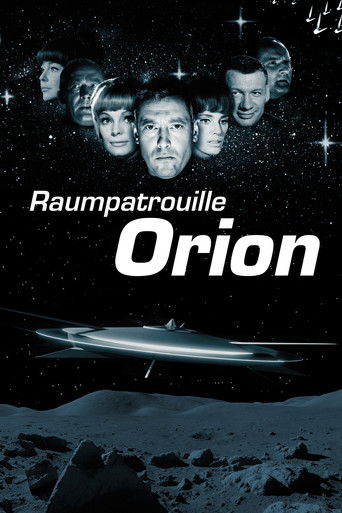
Space Patrol was made in 1966 with very little money and a great deal of imagination. Commander Cliff Allister McLane and the crew of the fast cruiser Orion patrol the outer sectors in the year 3000, watched over by a security officer, Tamara Jagellovsk, who is there to make him follow orders. The underwater base, the dance at the Starlight Casino and the control desk, in which sharp eyes will spot an electric iron and several pencil sharpeners, are all part of the legend. Only seven episodes exist, and they have been repeated ever since.
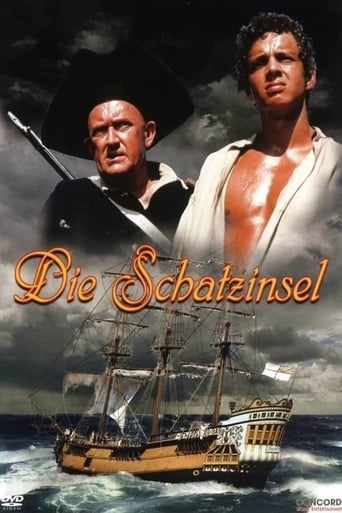
Between 1964 and the early eighties one German channel showed a four-part adventure from a classic novel every Christmas, made on location with French partners, and several are here. Die Schatzinsel of 1966 is still regarded by many as the best screen version of Stevenson's book. The Adventures of Tom Sawyer followed in 1968 and The Leatherstocking Tales in 1969. The Sea Wolf, from Jack London, made Raimund Harmstorf famous in 1971 as the captain Wolf Larsen, and Lockruf des Goldes returned to London's Yukon in 1975.
Karl May's noble Apache chief has two series. Pierre Brice, who had played Winnetou in the cinema, returned to the part for My Friend Winnetou in 1980 and again, eighteen years later, for Return to Winnetou. Präriejäger in Mexiko, made in East Germany with Gojko Mitić, adapts another of May's adventures. Es muss nicht immer Kaviar sein, from the novel by Johannes Mario Simmel, follows a banker with a talent for cooking who is recruited against his will by one secret service after another and escapes each time with a recipe, and Auf Achse sends Manfred Krug as a long-distance driver across three continents in eighty-six episodes.
History on screen
The event serial in two or three long parts is the form in which German television tells its history, and thirty-one productions in the catalogue belong to it. Hotels make good stages. Hotel Adlon follows the great house beside the Brandenburg Gate from its opening in 1907 to its rebuilding ninety years later, through the life of one woman who grows up in its corridors. Hindenburg: The Last Flight is set aboard the airship on its Atlantic crossing of 1937, and Die Luftbrücke tells of the eleven months in 1948 and 1949 when Berlin was supplied entirely from the air.
The years after 1945 have their own cluster. Our Miracle Years begins in 1948 in a small industrial town, where three sisters and their father's metal works face the currency reform and the question of what to do with the past. Little America is set in 1951 in a village in the Palatinate, where the arrival of an American garrison changes the life of a farmer's daughter. Rivals Forever - The Sneaker Battle is the true story of the brothers Adi and Rudi Dassler, who made sports shoes together in a Franconian town, quarrelled, and founded two rival companies on opposite banks of the same river. Call Me Levi follows a Bavarian emigrant to San Francisco and the trousers that made his name.
East Germany is seen from several sides. Honey Girls sends two sisters from Erfurt on holiday to Lake Balaton in the summer of 1986. The Palace is set in 1988 at the great revue theatre of East Berlin, where a dancer meets a visitor from the West who has her own face. Preis der Freiheit follows three sisters through the last year of the state. Zur See, made there in 1977, is a series about the crew of a cargo ship and its voyages; its success is said to have inspired the western cruise-liner series described above.
Artists and writers have portraits of their own. Bauhaus: A New Era opens in Weimar in 1919, when Walter Gropius founds his school and a young student named Dörte Helm arrives to study there. Kafka, made for the centenary in 2024, tells the writer's life in six chapters, each from a different point of view, with great wit. Brecht is a two-part portrait of the playwright in youth and age, and Confessions of Felix Krull adapts Thomas Mann's comic novel about a charming impostor. House Kummerveldt is a lively period comedy about a young noblewoman in the Münsterland of the 1880s who intends to be a novelist, whatever her brother says.
Three more belong to recent history. Die Sturmflut recreates the night in February 1962 when the North Sea broke the dykes of Hamburg. Other People's Money turns a vast tax affair of the 2000s into a story of two lawyers and one determined investigator, and Der Club der singenden Metzger, from a novel by Louise Erdrich, follows a master butcher from Swabia who emigrates to North Dakota in 1919 with a suitcase of sausages and founds a choir.
Young viewers
Sixteen series are about school and growing up or were made for children. The most affectionately remembered are the Christmas serials. Every December through the eighties one channel showed a new six-part story for the family, and Anna, in 1987, was the greatest success of them all: a girl who dreams of ballet is injured in an accident and fights her way back to the stage, with Silvia Seidel in the part that made her famous. Der Trotzkopf, from a well-loved novel of the 1880s, follows a headstrong country girl sent to a boarding school. Luzie, der Schrecken der Straße, made with Czech partners, gives a six-year-old two living lumps of modelling clay as accomplices.
School life today is the subject of DRUCK, the German version of a Norwegian format, which follows a group of Berlin pupils in short scenes released through the week at the moment they are supposed to happen; eighty episodes exist. Krass Klassenfahrt - Die neue Generation sends a class on a school trip. Almania is a comedy about a well-meaning new teacher, and Almost Fly goes back to 1990, when three boys in a small West German town hear rap for the first time on an American forces radio station and decide to form a group.
Spotlight is set at a performing arts school in Berlin and ran to nearly three hundred short episodes. Binny and the Ghost is a mystery comedy in which a girl moves into an old Berlin villa and finds a fourteen-year-old ghost from 1899 already living in her room. Stardust Hotel is a new fantasy about a young woman who inherits a hotel with guests from other worlds.
Stage, circus and show business
A handful of series look behind the scenes of entertainment. Salto Mortale, from 1969, travels with the Dorias, a family of trapeze artists, through the great circuses of Europe; it was filmed in real rings with real performers, and its theme tune is still recognised at once. Call My Agent Berlin moves a famous French format to a talent agency in the German capital, where well-known actors play themselves as difficult clients. The Institute - Oasis of Failure is a comedy about the staff of a German cultural institute in a distant and fictional republic, struggling to interest the locals in poetry evenings.
Last Exit Schinkenstraße, written by and starring Heinz Strunk, follows two dance-band musicians from Hamburg who fly to Mallorca to become stars of the party circuit. The Sheikh is about a salesman from a small town who presents himself as the heir to a fortune and finds that people are eager to believe him. Oh Hell! gives a young woman with a talent for improvising her way out of trouble sixteen short episodes, and Chabos sends a man of thirty-six back to his memories of a suburban youth in 2006, when he learns that his old class is holding a reunion and has forgotten to ask him.
Faces to follow
German-language television has its own company of familiar faces, and a catalogue of this size lets a viewer follow them from part to part. Manfred Krug, who had been a film star and jazz singer in East Germany before moving west in 1977, leads two long-running favourites: he is the lorry driver of Auf Achse and the lawyer of Liebling Kreuzberg, an advocate with a small Berlin practice, a taste for sweets and a firm dislike of unnecessary effort, written for him by the novelist Jurek Becker. Fifty-eight episodes were made, and it remains a model of the legal series with a human face.
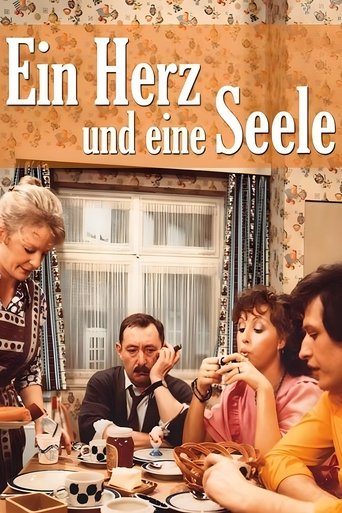
Josefine Preuß can be seen growing up on screen, from Lena in Türkisch für Anfänger to the heroine of Hotel Adlon, Hotel Sacher and the comedy Lotta & ..., in which a young woman tries one profession after another. Iris Berben appears across five decades, from the airline comedy Zwei himmlische Töchter of 1978 through The Legacy of Guldenburgs to Krupp: A Family Between War and Peace and Old Land. Heinz Schubert, who played the head of the Tetzlaff household, returns twenty years later among the four old friends of Der große Bellheim.
Nora Tschirner is the hologram of Ijon Tichy: Raumpilot and, in The Mopes, an unusual companion: the visible form of a musician's low spirits, who moves into his flat and comments on his day. Tom Schilling plays the young Brecht and leads Ich und die Anderen, a fable in which a man wakes each morning to find that the world has changed one of its rules. Bjarne Mädel, Christian Ulmen, Anke Engelke and Annette Frier each have a series built around them, and Christoph Maria Herbst and Bastian Pastewka share Zwei Weihnachtsmänner, a two-part comedy about two strangers trying to get home from Vienna to Germany by Christmas Eve after their flight is cancelled.
Christmas, in fact, has a shelf of its own. Over Christmas brings a struggling musician back to his parents' house for the holiday, where his brother has a surprise for him. Holiday Secrets gathers four generations of women in a house by the sea, and Friedliche Weihnachten follows a young couple who have decided to spend the season with both families at once.
Event serials and long runs
The catalogue divides sharply by length. Thirty-six productions are event serials of two, three or four long parts, each part the length of a feature film. They suit a weekend: Hotel Adlon on a Friday, Saturday and Sunday, or the four parts of Der große Bellheim across two. Six-part serials are the next size up, among them Kir Royal, Kafka, Bauhaus: A New Era and Hundertdreizehn, a drama that follows the many lives touched by a single road accident.
At the other end stand the long runners. Thirty-one series offer sixty episodes or more, and several are among the longest in European television: Young Doctors with four hundred and seventy-six, Forsthaus Falkenau with three hundred and twenty-one, Spotlight with close to three hundred and Alphateam – Die Lebensretter im OP with two hundred and sixty-one. Der Bergdoktor, Schillerstraße, RTL Samstag Nacht and Drei Damen vom Grill all pass one hundred and forty. A household in search of a companion for the winter will find one here.
Each series page gives the number of seasons and episodes under the title and lists the seasons one by one, and the Event serials and Long runs lists gather the two extremes.
Watching in German
Every series on Burning Series was made in German, and the services that carry them abroad usually offer English subtitles. For viewers new to the language, the medical and mountain series are an easy beginning: the stories are clear, the speech is unhurried and the pictures explain a great deal. The adventure serials and children's classics are simple to follow for the same reason. Comedy asks a little more, since so much depends on tone, but Türkisch für Anfänger, Berlin, Berlin and Danni Lowinski travel well.
Dialect is part of the pleasure. The Munich comedies are spoken in Bavarian, the Viennese ones in the soft, ironic speech of the capital, Familie Heinz Becker in the dialect of the Saarland and the kiosk and caretaker comedies in the voice of the Ruhr and the Rhineland. Subtitles carry the meaning, and the music of the speech comes free. Learners of German will find the catalogue useful: the family series are full of everyday conversation, and each series page gives the German title beside the English one, so that it can be found under either.
Many of the series are listed under their German titles because they have yet to be given an English one. Their stories are described in English on their pages like all the others, and for twenty-six series whose descriptions were very brief, the guide has written its own.
How the series were chosen
The selection began with a survey of German-language scripted series of every period, some four hundred in all, and was narrowed in three steps. First came the kinds of programme that suit a family evening: comedy, drama, family series, adventure and fantasy. Reality formats, game shows and talk were set aside, since Burning Series is a guide to stories. Then every remaining series was read through, and crime series, horror, stories of the battlefield and comedy written strictly for adults were removed. Finally the posters and descriptions were checked one by one.
The result leans toward the television that German-speaking families have watched together, and it takes that television seriously. A Saturday-evening hospital series and an eleven-part chronicle by a great director appear in the same lists, because both are part of the same history and each has given pleasure to millions. Some of the dramas deal with hard times, as any honest account of the twentieth century must, but they do so with care.
Burning Series keeps its titles to itself among the guides of its family; each was chosen for this catalogue alone. That is why a few of the best-known recent German series are absent, since they already have a home elsewhere. In exchange the catalogue reaches deep into the archive, and even a viewer raised in Germany is likely to meet something here for the first time.
Using Burning Series
The search field in the banner is the quickest way to a known series. It answers as you type and accepts German and English titles alike, so that Raumpatrouille finds Space Patrol and Der Seewolf finds The Sea Wolf. The A-Z page sets all 157 series out in alphabetical order, and All series arranges them by popularity.
My List works like a bookmark folder that Burning Series keeps for you. Each series page has an Add to My List button, and My List in the menu bar opens the folder. The entries are held in your browser's own storage on this device and are still there on your next visit; Remove takes one out, and the folder can be saved as a file and opened on a different device.
The help pages cover each part of the catalogue in a few lines: How to watch, Comedy, Family, Doctors and rescuers, Mountains and countryside, Cabaret and sketch, History, Young viewers, Adventure, Austria, Classics, Watching in German and Short and long, with Finding titles and My List for the tools.
A first month
A newcomer who would like a plan can take four weeks. In the first, begin with comedy: Türkisch für Anfänger on weekdays, two episodes at a time, and the seven episodes of Space Patrol at the weekend. In the second, go to the mountains with Der Bergdoktor and spend Sunday afternoon in the Black Forest with Die Schwarzwaldklinik. In the third, try the event serials: Hotel Adlon, Rivals Forever - The Sneaker Battle and Die Luftbrücke make a short course in German history.
In the fourth week, turn to the classics: Monaco Franze and Kir Royal for Munich, Loriot for an evening of perfect sketches, and then, with time set aside, the first films of Heimat. After that Top rated and Austria will supply the months that follow.
Questions and answers
Questions
What is Burning Series?
Burning Series is a guide to 157 German-language television series chosen for the whole household, each with its story, cast and a Watch now button to the official services that carry it.
Which series should I watch first?
Start with Türkisch für Anfänger, Space Patrol or Der Bergdoktor. All three are easy to begin and travel well with subtitles.
Is the catalogue suitable for families?
Yes. Every series was read through by hand, and crime series, horror, battlefield stories and comedy made strictly for adults were left out.
Are the series in German?
Yes. Every series was made in German, in Germany or Austria, and many services offer English subtitles.
Are there older series?
Yes. Forty-three series date from before 1990, among them Space Patrol, Ein Herz und eine Seele, Heimat and Die Schwarzwaldklinik.
Are there short series?
Yes. Thirty-six productions are event serials of four parts or fewer, and the Event serials list gathers them.
How does My List work?
Press Add to My List on any series page. The list is kept by your browser on your own device and can be saved to a file.
Does Burning Series host episodes or downloads?
Burning Series is a guide only. Every Watch now button opens JustWatch, which lists the official streaming, rental and purchase services for your country.
